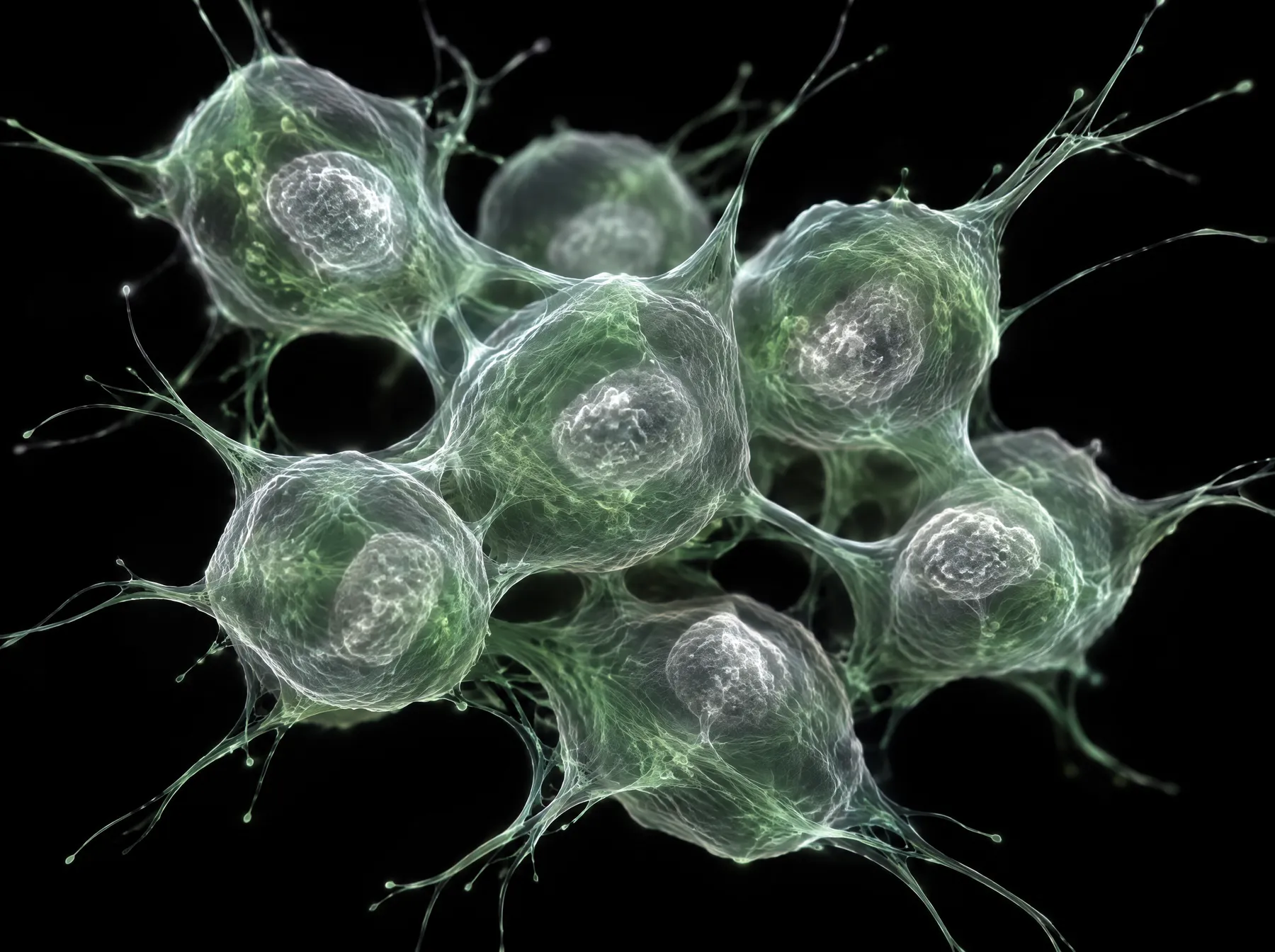
Klasik kanal tedavisi pulpayı uzaklaştırır ve yerine cansız bir dolgu koyar. Rejeneratif endodonti farklı bir soru sorar: bu boşluk canlı dokuyla yeniden doldurulabilir mi?
Yöntem özellikle kök gelişimini tamamlamamış ve pulpası nekroze olmuş genç daimi dişlerde kullanılır. Dezenfeksiyondan sonra kanal içinde kanama oluşturulur. Kan pıhtısı bir iskele görevi görür ve kök ucu çevresindeki dokulardan gelen kök hücreler, örneğin apikal papilla kök hücreleri, bu iskeleye yerleşebilir.
Başarılı olduğunda kök boyca uzamaya ve duvarları kalınlaşmaya devam edebilir; geleneksel bir tedavi bunu sağlayamaz. Ancak oluşan yeni doku genellikle gerçek bir pulpa değil, kemik ve sementi andıran bir onarım dokusudur.
Araştırmalar artık iskeleler, büyüme faktörleri ve diş pulpası kök hücreleri üzerinde yoğunlaşıyor; amaç orijinal pulpaya daha çok benzeyen bir doku elde etmek. Rejeneratif tıbbın günlük diş hekimliğine ulaştığı en açık örneklerden biri.
Classic root canal treatment removes the pulp and replaces it with an inert filling. Regenerative endodontics asks a different question: can the space be repopulated with living tissue instead?
The approach is used mainly in young permanent teeth whose roots have not finished forming and whose pulp has died. After disinfection, bleeding is induced into the canal. The blood clot acts as a scaffold, and stem cells from the tissue around the root tip, such as stem cells of the apical papilla, can move into it.
When it works, the root can continue to grow in length and wall thickness, which a conventional treatment would not achieve. The new tissue, however, is usually not a true pulp but a repair tissue that resembles bone and cementum.
Research now focuses on scaffolds, growth factors and dental pulp stem cells, with the aim of regenerating tissue that behaves more like the original pulp. It is one of the clearest examples of regenerative medicine reaching everyday dentistry.